

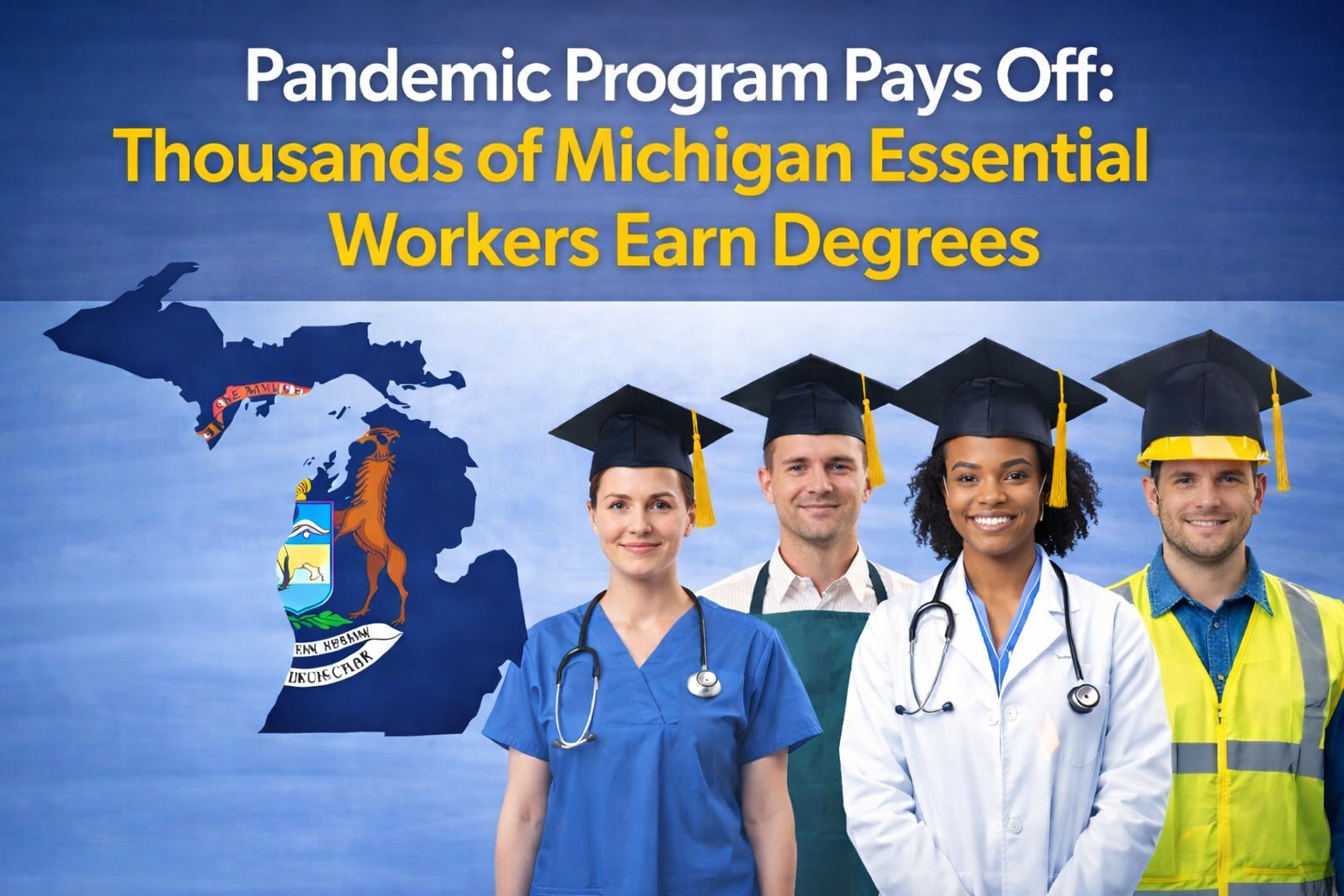
(LANSING) - A pandemic-era scholarship program helped thousands of Michigan essential workers earn college degrees and certificates, strengthening the state's workforce. According to Bridge Michigan, the Futures for Frontliners program spent 49 million dollars to provide free college tuition to essential workers during COVID-19. The program enrolled about 27,000 residents, with more than 6,000 earning a degree or certificate -- roughly one in four participants.
Most graduates earned associate degrees, with the most common fields including health professions, business, liberal arts, computer science, and engineering.
State officials highlighted several success stories. One participant earned a bachelor's degree in construction management, while another graduate reported a 40 percent income increase after completing an associate degree. A third graduate earned a business management degree while working full time and later received a promotion that boosted earnings by more than 20-thousand dollars.
The scholarship was available to Michigan residents without a degree who worked in essential jobs outside the home during the early months of the pandemic and were not in default on federal student loans. While more than 600,000 workers were eligible, about 85,000 qualified, and fewer than 30,000 ultimately enrolled.
Supporters say the program expanded access to education and helped workers move into higher-paying careers. About 91 percent of those who completed the program earned associate degrees, and graduates were predominantly female and racially diverse.
Some critics caution that long-term success will depend on tracking graduates' employment and earnings, data the state has not yet fully collected.
The Futures for Frontliners program officially ended after the 2024-25 school year, though a small number of students remain enrolled due to approved leaves. Michigan continues to build on that effort through other adult education initiatives, including the Michigan Reconnect, as the state works toward a goal of having 60 percent of residents earn a postsecondary credential by 2030.