

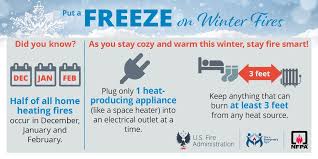
(QUINCY, MA) - Winter weather brings a sharp rise in home heating fires, with nearly half of all U.S. heating-related incidents occurring between December and February, according to the National Fire Protection Association.
From 2020 through 2024, fire departments nationwide responded to an estimated 37,365 home heating equipment fires each year. Those fires resulted in 417 civilian deaths, 1,260 injuries, and more than $1.2 billion in property damage, the NFPA reports.
Space heaters and heating stoves were responsible for the majority of the most severe outcomes, accounting for 73 percent of deaths and 70 percent of injuries tied to heating fires.
Fire safety officials stress the importance of having heating systems inspected annually by qualified professionals and keeping anything that can burn at least three feet away from furnaces, fireplaces, stoves, and space heaters.
Carbon monoxide safety is also a major concern during the winter months. The NFPA recommends installing carbon monoxide alarms outside sleeping areas and on every level of the home, testing them monthly, and interlinking alarms when possible. Generators should only be used outdoors and far from doors and windows, and vehicles should never be left running inside garages.
Electrical and cooking safety also play a role in preventing winter fires. Officials advise using only one heat-producing appliance per outlet, avoiding running cords under rugs, and keeping cooking areas free of combustible materials. Turning pot handles inward, keeping a lid nearby, and maintaining a three-foot safety zone for children and pets around cooking areas can also reduce risk.
"With winter storms affecting large areas across the country, this is an ideal time to remind everyone of safe heating practices," said Lorraine Carli, NFPA vice president of Outreach and Advocacy. "Proper precautions can prevent fires, injuries, and fatalities."
Additional winter heating and fire safety tips are available on the National Fire Protection Association's website.